Understanding the Bosch dual filtration system
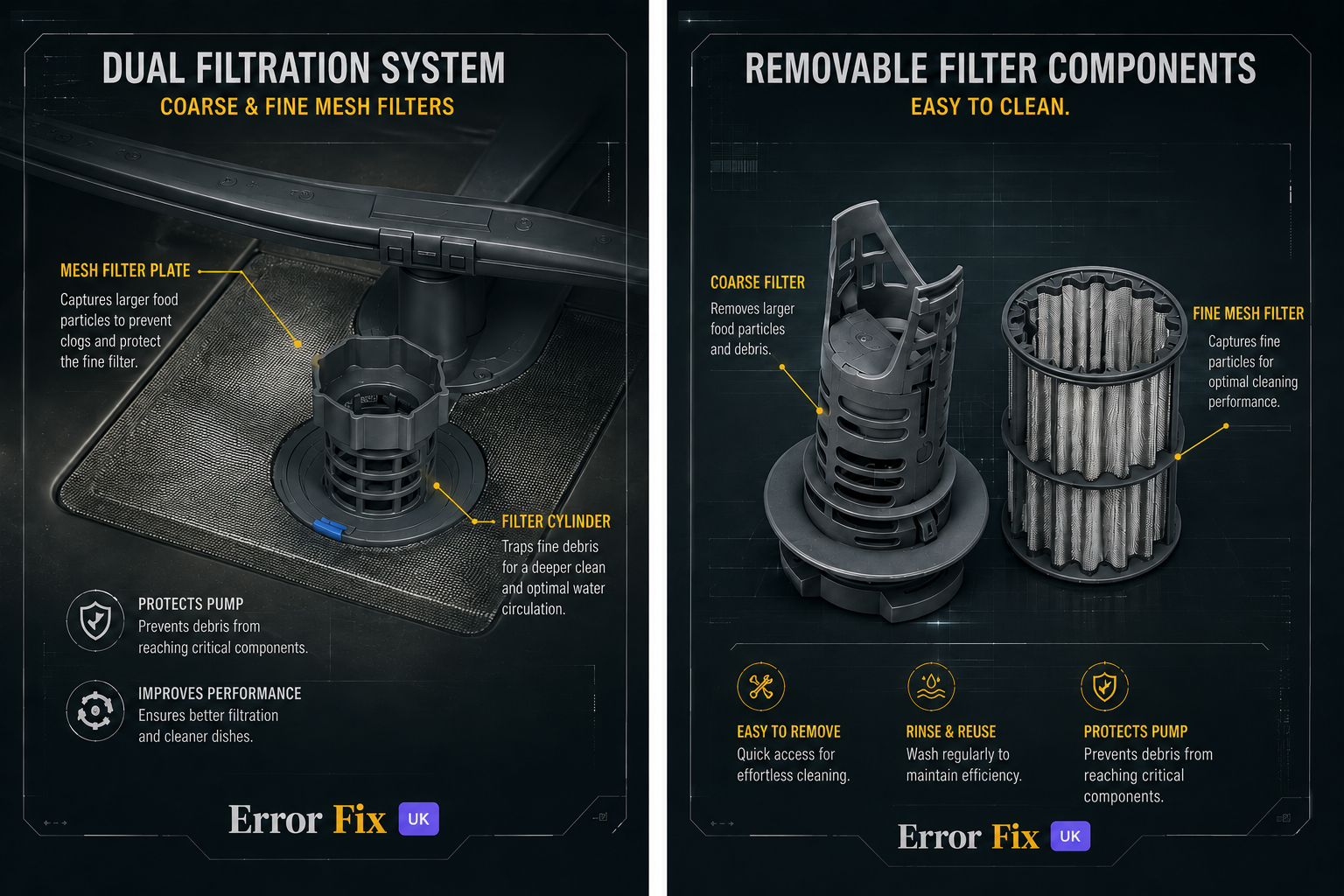
Bosch dishwashers use a two-part filtration system made up of a coarse filter and a fine mesh filter. Together, these components trap food particles, grease, and debris before they can recirculate onto your dishes or reach the wash pump. The coarse filter — the cylindrical basket you can see at the bottom of the tub — captures larger debris like food scraps and broken glass fragments. The fine mesh filter, which sits beneath and around the coarse filter, captures smaller particles that would otherwise leave a gritty residue on your crockery. When either filter becomes clogged, the dishwasher cannot circulate water efficiently. You may notice dishes coming out dirty, the machine draining slowly, standing water at the bottom, or one of the dishwasher's built-in fault codes appearing on the display.
Regular filter maintenance is the single most effective thing you can do to keep your Bosch dishwasher running efficiently. Bosch recommends checking the filter at least once a month — more often if you regularly run heavily soiled loads.
Affiliate link — we may earn a small commission at no extra cost to you. Disclosure
What you need before you start
One of the advantages of the Bosch filter design is that it requires no tools to remove or refit. You will need: a sink with running water, a soft-bristled brush (an old toothbrush works perfectly), mild washing-up liquid, and a few minutes of time. Before you begin, make sure the dishwasher has completed its current cycle and the interior has had a chance to cool down. There is no need to disconnect the power supply for this task.
Step-by-step removal
Open the dishwasher door fully and pull out the lower basket to give yourself clear access to the bottom of the tub. Look towards the rear-centre of the floor — you will see the cylindrical coarse filter sitting inside the fine mesh filter plate. To remove the coarse filter, grip the top handle (some models have an arrow indicating the unlock direction) and rotate it anti-clockwise approximately a quarter turn until it unlocks. Lift it straight out. With the coarse filter removed, you can now lift the fine mesh filter plate out of the recess — it simply lifts free with no twisting required. Set both parts aside on a clean surface next to the sink.
Never use excessive force when twisting the coarse filter. If it feels stiff, check that you are turning it in the correct direction (anti-clockwise). Forcing it clockwise can damage the locking tabs and require a replacement filter assembly.
Rinsing and scrubbing both components
Hold the coarse filter under warm running water and use your brush to scrub away any visible food debris from the inside and outside of the mesh. Pay particular attention to the base of the cylinder where grease and residue tend to accumulate. If the filter is particularly greasy, apply a small amount of washing-up liquid and work it into the mesh before rinsing thoroughly. For the fine mesh filter, rinse it under running water with the mesh facing downwards — this helps flush debris out rather than pressing it further into the mesh. Use the brush to gently scrub both sides of the mesh. Avoid using abrasive scourers or steel wool, as these can damage the fine mesh and reduce filtration effectiveness. Once both components are clean, give them a final rinse and shake off any excess water.
For a deeper clean, soak both filter components in a bowl of warm water with a tablespoon of white vinegar for 10–15 minutes before scrubbing. This helps dissolve limescale and grease deposits that are resistant to rinsing alone — particularly useful in hard water areas.
What to look for
Before refitting the filters, take a moment to inspect both components. Hold the fine mesh filter up to the light — the mesh should appear uniform with no visible tears, holes, or deformities. Even a small hole in the fine mesh can allow debris to bypass filtration and reach the pump, causing more serious damage over time. Check the coarse filter for cracked or missing ribs and ensure the locking tabs at the base are intact. Also inspect the filter housing in the dishwasher itself: clear away any debris that may have settled in the recess, and check that the rubber seal around the housing is present and undamaged. A damaged seal can allow water to bypass the filter entirely. If any components are cracked, torn, or deformed, order a replacement filter assembly before continuing to use the dishwasher.
If you notice broken glass or sharp fragments in the filter housing, do not reach in with bare hands. Use rubber gloves and carefully remove fragments with kitchen tongs before rinsing the area clean.
Correctly reinstalling both components
Refitting is essentially the reverse of removal, but it is important to seat both components correctly to avoid leaks or poor performance. Start by placing the fine mesh filter back into its recess in the base of the tub — it should sit flat and flush with the surrounding floor. Align the coarse filter over the central opening of the fine mesh filter and lower it into position. Rotate the coarse filter clockwise until you feel it lock into place — you may hear or feel a soft click. Give it a gentle tug upwards to confirm it is locked; it should not pull free easily. Slide the lower basket back in, close the door, and run a short rinse cycle to confirm the machine is draining and washing correctly.
Never run the dishwasher with the filter missing or incorrectly fitted. Operating without a filter allows debris to reach the wash pump, which can cause blockages, premature pump failure, and costly repairs.
Best practice for ongoing maintenance
The best way to reduce filter cleaning frequency is to scrape plates before loading them into the dishwasher. You do not need to pre-rinse dishes — modern Bosch dishwashers are designed to handle light soiling — but removing large food scraps prevents rapid filter clogging. Avoid washing items with very fine materials (coffee grounds, sandy vegetables) without pre-rinsing, as these pass through the coarse filter and quickly clog the fine mesh. Running a hot maintenance wash with a dishwasher cleaner tablet every 1–2 months also helps break down grease deposits inside the machine and keeps the spray arms clear. Finally, check and clean the spray arms periodically — blocked spray arm holes reduce cleaning performance even when the filter is perfectly clean.